


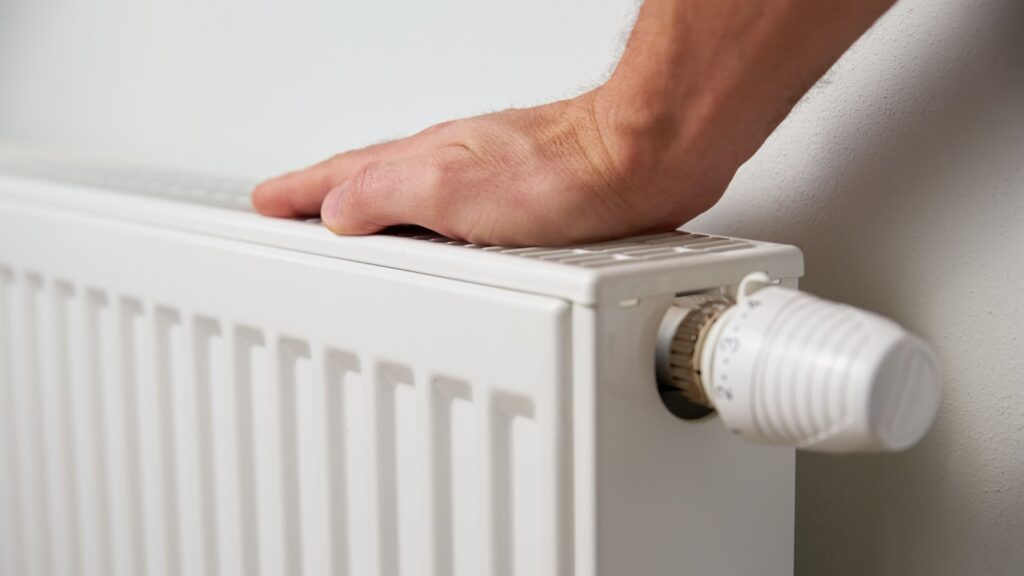
There is a phone call every heating engineer in Devon gets in the last week of October. It starts with “we’ve just put the heating on for the first time and…” and ends with radiators that are cold at the bottom, a boiler making noises it should not make, and a household wearing coats indoors while they wait for an appointment. Almost all of it is caused by the same thing — sludge — and almost all of it is avoidable if you deal with it in September, before the heating season starts and before every engineer in the county is booked solid.
What sludge actually is
Over the years, the water inside a central heating system slowly corrodes the inside of radiators and pipework, producing a black, iron-rich sludge (the trade calls it magnetite). It settles at the bottom of radiators, clogs pipework, and collects in the boiler’s heat exchanger. The symptoms are familiar: radiators hot at the top and cold at the bottom, some rooms never warming up properly, kettling and banging noises from the boiler, and heating bills creeping upward because the system is working harder to deliver less heat.
Left alone, sludge does not just make the house colder — it shortens the life of pumps, valves and boilers. A new boiler fitted onto a dirty system starts corroding from day one, which is why many boiler warranties now require the system to be flushed.
What a power flush does
A power flush machine connects into the heating circuit and pushes a high-flow, low-pressure stream of water and cleaning chemicals through the system, radiator by radiator, dislodging the sludge and carrying it out of the system. It is the difference between rinsing a pan and actually scrubbing it. Our Central Heating Power Flush unit hires from £70 excl. VAT — a fraction of what you would pay for the machine, and considerably less than a contractor’s price for the same job.
It is a job well within reach of a competent DIYer with a methodical streak, and for plumbers and heating engineers it is an easy add-on service: hire the machine for the day, flush two or three systems, and the hire cost disappears into the margin.
How to tell if your system actually needs one
Not every system does, so here is the honest checklist. Bleed a radiator into a white cup or jar: if the water comes out black or dark brown, that is magnetite, and a flush will pay for itself. Feel your radiators when the heating has been on for half an hour: cold patches at the bottom-middle of a radiator (rather than air at the top) are settled sludge that bleeding cannot touch. Other tells include a boiler that kettles — that rumbling, banging noise as it heats — rooms that have gradually got slower to warm over several winters, and a heating pump that runs hot or noisy because it is pushing treacle instead of water.
If the water runs clear and everything heats evenly, save your money — top up the inhibitor and carry on. We would rather tell you that at the counter than hire you a machine you do not need.
Why September, specifically
Three reasons. First, the system is cold and idle, so you can work on it without leaving the house unheated at the worst time of year. Second, if the flush reveals a weeping valve or a radiator past saving, you have weeks to sort it calmly rather than days. Third — and this is the one people learn the hard way — come late October, heating engineers’ diaries fill up fast. September is the quiet month. Use it.
Plan a full day for an average three-bed house — longer if the system has never been cleaned. Alongside the machine you will need flushing chemical and a bottle of inhibitor to refill the system with; ask when you book and we will talk you through what goes in and in what order. And once the system is clean, keep it that way: a dose of inhibitor at every top-up, and if you are having a boiler fitted, a magnetic filter on the return is cheap insurance on a system you have just spent a day cleaning.
While you’re at it
A few other bits from our Plumbing and Pipework range earn their keep at this time of year. An electric Pipe Freeze kit (from £20) lets you work on pipework without draining the whole system — genuinely useful when swapping a radiator valve. And a set of Drain Rods (from £4) is worth a weekend hire in its own right: clearing gutters, gullies and drains of a summer’s worth of debris before the autumn rain finds every blockage for you.
Get it booked
The power flush unit is a popular machine once the first cold snap arrives, so if you want it on a particular weekend, ring ahead on 01626 333823 or email hire@olympustoolhire.co.uk and we will put your name on it. Collection from the yard at Olympus Business Park, Newton Abbot — or we can deliver. Your late-October self will thank you.