

October is when Devon’s moisture problems introduce themselves. Windows start streaming with condensation, that patch on the bedroom wall reappears, freshly plastered walls refuse to dry, and the first proper storm finds the one weak point in the roof. Whether you are a builder trying to keep a renovation on programme or a homeowner dealing with a leak, the answer is usually the same: controlled heat, moving air, and a machine that pulls water out of the room faster than the season puts it in.
Drying new plaster and screed when the weather turns against you
In summer, a plastered wall dries on its own in a few days. In a cold, damp October, the same wall can sit wet for weeks — and everything behind it in the schedule (mist coats, second fix, flooring) sits waiting with it. Trades know this cycle well: it is the time of year when drying time, not labour, becomes the thing that blows the programme.
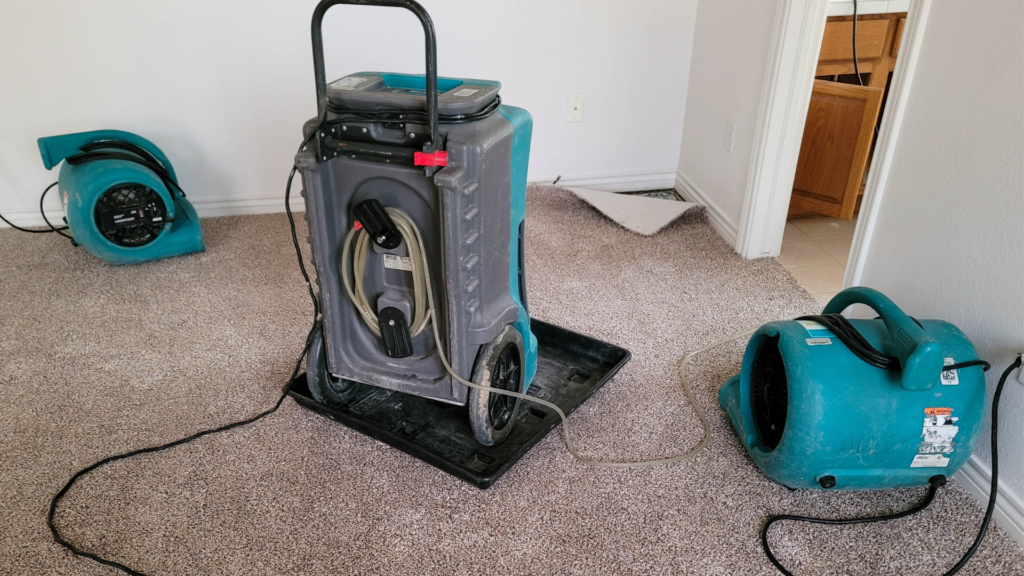
The fix is a Dehumidifier running in a closed room, with gentle background heat to keep the moisture moving out of the wall and into the air. Our large dehumidifier (from £46 excl. VAT) will strip litres a day out of a wet room; the small unit (from £35) suits single rooms and finished spaces. One warning from experience: do not blast fresh plaster with direct heat to speed it up — it dries the surface, cracks it, and leaves moisture trapped behind. Low heat, closed room, dehumidifier. Patience, mechanised.
Heat for workshops, garages and jobs that won’t wait
An unheated workspace in autumn is not just unpleasant — paint won’t cure, filler won’t set, and adhesives stop behaving. Our Electric Space Heater (240V, 2.8kW, from just £12) runs off a standard supply and takes the edge off a garage, workshop or single room quickly. For the full range of options, see Heating and Drying.
Working somewhere dark as well as cold? A Plasterers Light (from £10) throws proper, even light across a wall — the difference between finding the hollow spots now or after the paint has gone on.
Condensation, leaks or rising damp? Diagnose before you dry
It is worth thirty seconds of diagnosis before you hire anything, because the three common kinds of damp want different responses. Condensation — by far the most common — shows up as streaming windows, black mould in corners and behind furniture, and it is a ventilation-and-moisture-balance problem: a dehumidifier helps enormously, but so does not drying washing on radiators with the windows shut. A leak or penetrating damp shows as a defined patch that grows when it rains; find and fix the source first, because no dehumidifier can outrun a live leak. True rising damp is rarer than the quote-happy end of the industry suggests, and worth a proper independent survey before anyone injects anything.
For the first two, the drying kit below is exactly the right tool. For the third, dry the room by all means — but get the diagnosis before the damp-proofing invoice.
How long does drying actually take?
Honest answer: longer than you hope, less than you fear. A room that has had a minor leak typically needs three to seven days of dehumidifier-plus-heat. Fresh plaster in autumn wants a week or two of assistance depending on thickness — a full re-skim dries far faster than new backing coats on old cob or stone. Thick old walls that have been damp for months can take weeks, which is why we hire dehumidifiers by the week at rates that make a long dry-out affordable. The machine’s collection tank tells the story: when the daily haul of water drops right off, the room is getting there. A cheap moisture meter confirms it before you decorate.
Leaks, floods and drying out after the worst has happened
If water has already got in — a failed gutter, a burst pipe, a storm-driven leak — speed matters. The longer a floor or wall stays wet, the more of it you end up replacing. Get the water out first (our 1 inch puddle pump, from £15, will take standing water down to a few millimetres), then get a dehumidifier and heater in the same day. A carpet that is dried within 48 hours is usually a carpet saved; one that sits wet for a week rarely is. We also hire carpet cleaners and vacuums for the aftermath.
The cheap habits that help the machines
Hired kit works best alongside a few free habits: lids on pans, bathroom door shut and window cracked after showers, washing dried outdoors or in one sacrificial room with the dehumidifier running rather than draped over every radiator in the house. An average family puts litres of water into the air of their home every day, and in a well-sealed modern house or a cold-walled old one, all of it has to go somewhere. The machines win the battle; the habits stop it restarting in November.
Hire it for the week, not the winter
The pleasant thing about drying equipment is that the job ends. A dehumidifier hired for a week or two does the work, and back it comes — no buying a machine that then lives in the loft. If you are not sure whether your job needs the big dehumidifier or the small one, one heater or two, ring us on 01626 333823 and describe the room. We have talked hundreds of people through this exact conversation, and we would rather you hired the right kit than the most kit. Delivery available across Newton Abbot, Torbay and the surrounding area.